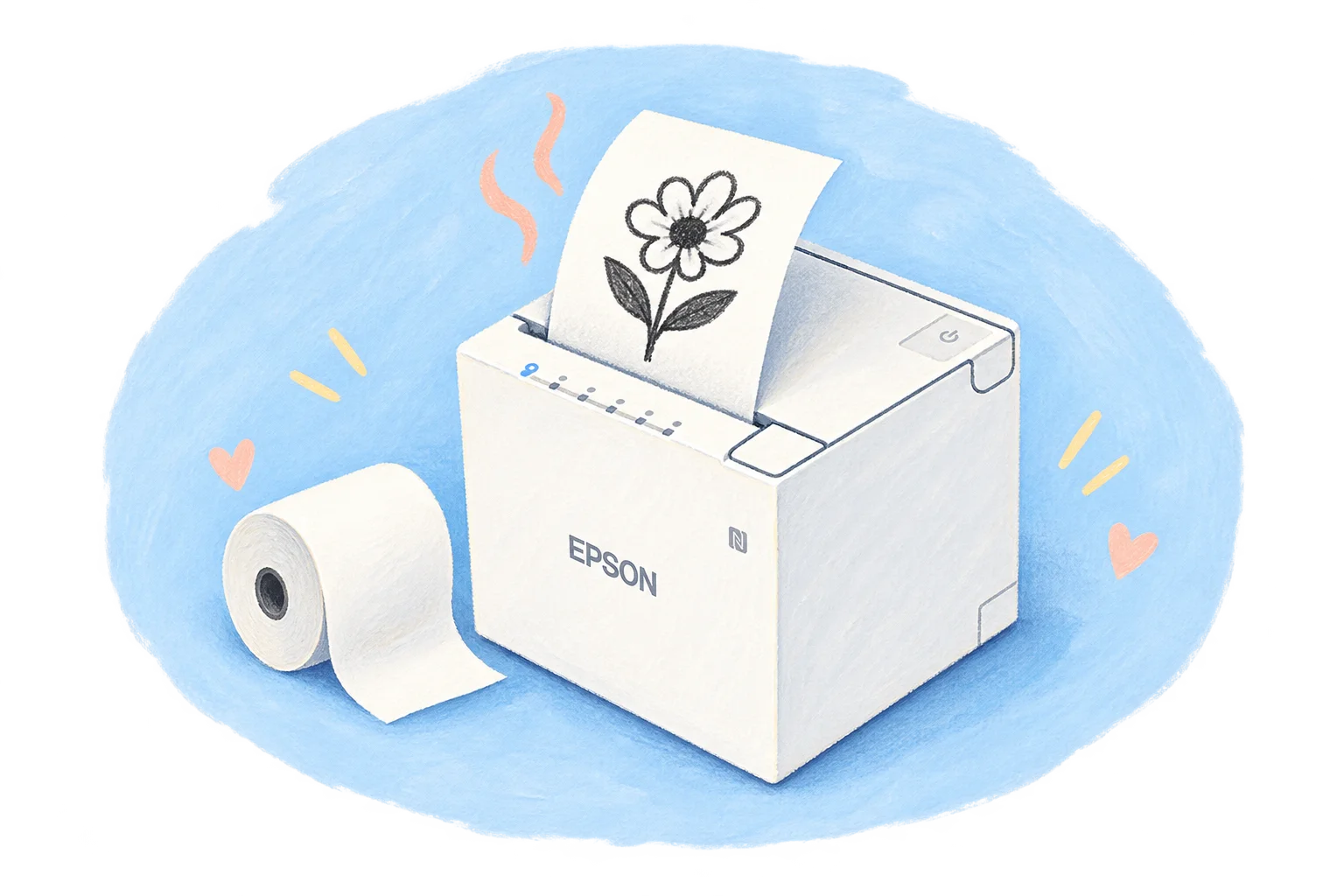
A little extra thought for little hands
The paper matters.
We choose phenol-free.
For the notes they keep.
And the art they make.
A lunchbox surprise. A dinosaur covered in crayon. This paper will spend time in the hands we care about, so we’ve looked closely at what goes into it. Our choice is phenol-free thermal paper, with clear information from the supplier about how it’s made.
Many thermal papers use BPA, BPS, or other phenolic developers to make the print appear. A “BPA-free” or “BPS-free” label alone doesn’t tell the whole story. We look for phenol-free, with confirmation that no BPA, BPS, or other phenolic developers are added.
It’s a more thoughtful choice for the prints we bring home. The Minnesota Pollution Control Agency also recommends phenol-free paper when you need thermal prints. Read the guidance behind our choice ↗
Phenol-freeour starting point for choosing paperA roll that fits80 mm wide for the Epson shown hereClear ingredientscheck the exact supplier’s statement
Option 01 / U.S. supplier
POS Supply Solutions
Non-phenol 3⅛″ × 230′ rolls, item T318-230-PF. The seller states no BPA or BPS and lists a 73 mm outside diameter.
See this paper ↗Option 02 / U.S. supplier
POSPaper
Their phenol-free 3⅛″ × 230′ rolls are listed as made without BPA or BPS. Confirm the current roll dimensions with the seller before ordering.
See their phenol-free paper ↗A heads-up on quantity: these listings sell boxes of 50 rolls. That’s a lot for a home. Ask about a small sample pack or split a box with a friend. Check that the smaller pack uses the same phenol-free paper.
Roll limits: TM-m30II-H specifications and TM-m30III specifications. The models shown take 80 mm paper with an outside roll diameter up to 83 mm. Other printers may differ. Supplier statements checked September 19, 2026; we have not independently tested the paper’s chemistry. “Phenol-free” describes the developers used, not a guarantee that any paper is completely risk-free.
For pantry and fridge notes, attach the paper to the outside of the container. The dates in our example notes are words you supply, not a food-safety calculation.